Every combat soldier has a twisted desire to see action, imbalanced by his fear of suffering injury or seeing a friend go down. Lone soldiers tend to share this desire one step further; part of the journey from overseas spectator to frontline participant is a longing to get a hands-on sense of the Arab-Israeli conflict.
Some of my garin friends have satisfied this need. Two of them serve in the Givati Brigade, and have seen action against smugglers by the Gaza border and all sorts of activity in the West Bank. One was called to separate rioting groups of Jewish settlers and Arab villagers in Samaria; rubber bullets and tear gas helped keep both sides away from each other and the soldiers in between. The other has countless stories of detaining and interrogating Palestinians on patrols, roadblocks and ambushes. Another garin friend in the Golani Brigade was front and center on the northern border during the Al Nakba clashes on May 15. A close friend who moved to Israel from America shortly after me has seen more action than probably anyone in my garin. Working as a journalist, she has covered demonstrations across East Jerusalem and as far away as Tahrir Square in Cairo.
And then there is me, with nineteen months of training to be some sort of special forces fighter and not an hour of real work to speak of.
Until now. This week marked the end of the Paratroop Brigades months-long refresher training. The final night march of the week was brutal, easily the toughest physical/mental challenge I have had in the army besides misakem maslul. I nearly blacked out repeatedly when waves of dehydration-like syndromes enveloped me during the last three hours of the march. With the week complete, I have forever finished the tough training exercises that are the most rigorous parts of military service. Starting in two weeks my unit will be heading to the West Bank for kav (literally, ‘line’), the army term for the territory combat units are responsible for on active duty. There I will finally have a chance to appreciate what all my training has been for, to finally gain a sense of the real challenges faced by a combat soldier.
BONUS
What should future lone soldiers do if they really want to get a taste of the action?
1) If serving less than three years because of your age, serve in the regular infantry (gdud) rather than a special forces unit (gadsar or any of the elite units like Maglan, Duvdevan, etc). If your service time is already three years, then by all means, invest the added energy and try and get into an elite force.
The reasoning is quite simple, backed up by the experience of many lone soldiers. First, elite unit have longer training sessions. While this means soldiers get exposed to skills like navigating and Krav Maga that the regular grunts do not touch, it also means more of one’s service will be spent in training rather than active service. Second, many special forces units, especially the most elite forces, are not exposed to the day in and day out engagements in the West Bank and along the borders. Elite units are saved in reserve for infrequent special missions. Sure, they are extra glamorous and challenging. But especially if one is serving less than the full three years, the amount of actual action you will see on a half dozen special operations missions pales in comparison to the work the grunts face every day. Yes, the majority of a regular grunt’s work is harmless foot patrols and boring sentry postings. And the food and gear cannot compare to the more elite units. But it is the regular infantry, not the elite units, who hold down the frontlines.
Note, special forces units require all members to serve for three years, even if less time is required of a lone soldier to serve in the army given the advanced age at which he enlisted. Though elite units have been tightening up on this requirement over the last couple of years, there are still dozens of lone soldiers in gadsar units and elsewhere who for one reason or another serve less than the three years. I am a perfect example. While the Recon Paratroops require soldiers to sign three years like every gadsar, I have never been asked to add time on to the two years I volunteered to serve when I first enlisted in 2009. Why? Disorganization and ignorance by the logistic folk in my unit.
2) Pass on course makim (the NCO course) and stay a regular grunt.
This suggestion shares a similar argument to its predecessor. Serving as a staff sergeant (mak or samal) requires one to take a three month course. This course, besides having a less than sterling reputation, removes one from active duty for the duration of the course. Becoming a staff sergeant can also lead to assignment away from the frontline since graduates of course makim are needed to fill a range of noncombat positions, from training new recruits to a few less exciting, logistic-type jobs.
Serving as a mak and samal means added responsibility and greater leadership. Both of these are very worthwhile, especially for the type of person (myself included) who finds greater meaning serving as a mentor and leader. But the advice I am giving here is not about having the best military service. It is simply about how to maximize one’s exposure to frontline duty.
3) Become a sniper or a similar specialized dealer in death.
Becoming a sniper requires one to leave the frontlines for several weeks in order to attend sniper school. The “sacrifice” in time on the frontlines is worth it because as a sniper, you are a highly valuable combat soldier, far more likely to see action than a regular grunt (sacrifice is in quotations because despite the intent of this advice, to maximize frontline duty, it is worth remembering that time away from endless hours of sentry duty and bad food is not really a sacrifice). A similar argument goes for other specialized weapons, from the basic Negev light machine gun to the heavier equipment.
4) Serve for the maximum three years, volunteering for extra time if your advanced age means you only have to serve sixteen or twenty-four months. This last bit of advice is very much tongue in cheek since outside of pilots and certain commando units, no soldier in his right mind would or should ever volunteer extra time once he is already signed up for less time as a combat soldier. This is not meant to sound cynical. Merely realistic.
Saturday, June 18, 2011


My Man in Cairo: Grapel & Global Justice
You choose a side the day you join the army.
Ilan Grapel’s arrest in Egypt really angers me. While the Egyptians were accusing Ilan, an American Jew, of fomenting unrest in Egypt as an agent of Israel’s Mossad, the actual case rests on his biography: Jewish, Israeli, Arabic speaker, and— courtesy of a few indiscriminate Facebook photos—former Israeli soldier. Good thing they did not cite Ilan’s university as further reason to arrest him, I joked to a friend, since a shared alma mater is one more similarity Ilan and I have in common.
While Ilan and I never crossed paths in university (he graduated the year before I arrived), we have walked in each others’ footsteps in the Arab world. Like Israel’s supposed man in Cairo, I know what it is like to be a Jewish American with ties to the Jewish State and a passport filled with Arab visa stamps. Those stamps do not come without risk. But the inherent danger, or some naïve wanderlust, is not what drives the Grapels of the world to spend time in Arab countries (disclaimer: I am not actually claiming to know exactly what drove Grapel himself to be in Cairo, I am only referring to your average savvy young Jew that spends time in Arab countries, such as me, despite the inherent risk). Our motivation comes from the otherness of Israel’s neighbors, a desire to transcend entrenched biases and understand Arab society in a way that cannot be grasped from a FOX News telecast or a Bernard Lewis critique of the Arab psyche. We seek to make the foreign more familiar. And we do so without apology, convinced that what we do rather than who we are should determine our fate.
Accusing Ilan of being an Israeli spy because he is Jewish, has served in the Israeli army and has the gall to spend his summer break from law school assisting African refugees in Cairo is a reminder that the world has little patience for cross-cultural idealists. While his arrest is disheartening, my anger is fueled by the fear that a close friend of mine could meet a similar end. Like Ilan, my friend is working in the Arab world over the summer despite his Jewish faith and past Israeli military service. A mutual friend bemoaned our Lawrence of Arabia’s stubborn naivety. He does not understand that a person cannot play both sides.
Sides?! When did we choose sides?
You choose sides the day you are born, the mutual friend explained, the day you make aliyah, the day you join the army.
Lawrence, my friend the former Israeli soldier now working somewhere in Arabia, wrote to me a few days later, explaining his motivations as follows,
If I get kidnapped tomorrow, I hope that the following thoughts are what endure of my legacy. …I've come to realize in the past few years since the army that our beliefs and values do not matter for anything unless we live them out through our own choices. At the risk of sounding trite, my most central personal value at this point in my life is to aspire to a future without borders between people and nations, in which each person is equally free to seek opportunities throughout the world as anyone else. It galls me that there are places that I am not "allowed" to go, or not "supposed" to go, places where I know that I can make an impact but am prevented from going because of arbitrary administrative reasons. I don't care if this is idealistic - it is what I want for myself and I refuse to live in any other kind of world.
As you say, being smart and well-intentioned is not a defense against [getting in trouble]. But I fully believe that, as long as you are genuine, more good than harm will befall you in the end. I may be kidnapped, I may even be killed - but eventually it will be learned and taught that I was not who they accused me of being, and my captors or killers will be brought to justice and my legacy redeemed. I really believe this, because the alternative to believing this is a state of constant agonizing choices that you have to face, each of the following form: “Is the marginal increase in impact that I can make worth the marginal increase in risk?” In economics this is called being rational but in life it is a recipe for misery - we should all seek to make the greatest impact we can make, let the risks fall where they may.
(Warning: stop reading now to avoid the philosophical moralizing that follows)
My friend’s conviction is refreshing. Yet as much as I admire his determination to live by certain ideals, it is those ideals themselves, “a future without borders between people and nations, in which each person is equally free to seek opportunities throughout the world as anyone else,” that, like Ilan’s arrest, challenge me to reconsider my own loyalties.
Both Ilan’s arrest and my friend’s defiant words touch on the concept of cosmopolitanism, the ideology that man owes his primary allegiance to the global, rather than local, community. Or in other words, that individuals rather than states and other group entities are the fundamental units of moral concerns--that every individual is entitled to my equal concern and respect. A “citizen of the world” is how history’s first self-consciously cosmopolitan described himself, a Greek philosopher by name of Diogenes the Cynic who (echoing Socrates) rejected the fierce city-state allegiances of his time in favor of the universal community of man. Ancient Greek philosophers who follow the cosmopolitan tradition describe man’s moral responsibilities as a series of concentric circles. The innermost circle is the self, followed progressively by circles that represent family, relatives, friends, local group, and countrymen until a final, outermost circle that represents all of humanity. Martha Nussbaum, a contemporary moralist, Jewish convert and the first thinker whose work I seriously engaged as a freshman in university, explains that the task of world citizens is to “draw the circles somehow towards the center, making all human beings more like our fellow city dwellers, and so forth.” The basic idea of cosmopolitanism, in short, is that all people, not just family members or fellow citizens, belong to a single community based on our common humanity.
Ascribing to a cosmopolitan outlook has real consequence. While not every cosmopolitan will come down in favor of a single world government, someone who prioritizes the global over the local community (alternatively, someone who seeks to make the global local) would insist that there is zero moral ground for curtailing cultural freedoms (language, religion and customs) in the name of nation, church or party. With the world growing more interconnected thanks to modern travel and communication, man is no longer blissfully ignorant of the suffering of others. Television and the internet abolish distance, prompting a moral consciousness that allows cosmopolitans to insist that political and economic barriers that prejudice one local community over another are morally bankrupt. Or in other words, being an American, a football fan or a religious Jew does not grant me and mine any moral superiority, nor the right to privilege folks like myself over those outside my particular nation, custom and creed.
There are any number of knee-jerk reasons to reject cosmopolitanism (most of which are variations of a social-Darwinist rejection of moral altruism). A more compelling criticism however, lies in demonstrating that cosmopolitanism in fact undermines morality. That is, the ideology that says mankind belongs to a single community acts against the ethic that calls for man to put others interests’ before his own (i.e. altruism, though I use the term morality and altruism interchangeably). Such a counter-intuitive assertion follows from understanding that the two building blocks of morality, a sense of mission and familiarity, do not jive with cosmopolitanism. Ergo, cosmopolitanism does not promote altruism.
Evolutionary biologists have long argued that morality evolved naturally among advanced species. Doing good for others, they argue, is hardwired: we do good because it feels good. Unfortunately for the Darwin crowd, they cannot explain what makes altruism different from others pleasures which man controls when doing so is in his best interest. Unlike food, for instance, which man limits his enjoyment of to stay healthy, people do good for others even when they may themselves suffer. So there must be other reasons, rationale reasons, why we are moral.
Fortunately for the non-Ayn Rand crowd, there are. The first is familiarity. I am my brother’s keeper because he is my brother. Because I know and love him, I will do things for him I would do for no one else. Or as Michael Walzer argues, ethical standards arise from shared customs that can only be nurtured within discrete cultures and societies. The second reason is a sense of mission. In order to make the world a better place, I am prepared to give charity, help old ladies across the street and generally help others at my expense. A larger goal, a purpose, prompts me to feel the pain of others as keenly as my own.
Familiarity presents the starker challenge to the world citizen mantra. Even with all the advances in modern technology, it is impossible to become as familiar with strangers as you are with your family and friends. And even if you could take a pill that made you feel as close to everyone in the world as you do to your immediate family, the emotional necessity of exclusivity that powers familiarity to serve as a reason to be moral would be lost. (Marriage, as it happens, builds on this same need for exclusivity in an intimate relationship. Judaism teaches that marriage is in fact man’s attempt to realize the otherwise near impossible biblical mandate of loving your neighbor as yourself.) Thus in the cosmopolitan utopia, morality is undermined by the absence of intimacy. If everyone is my brother, then the power of brotherhood no longer has meaning, and I no longer am willing to place my brother’s interest before my own.
The second pillar of moral behavior, a sense of mission, also causes problems for the cosmopolitan agenda. Mission-minded folks can only effect real change by teaming up. The teams they form, be they nations, religions or fan-clubs, become the means through which the greater good (a future more democratic, godly or obsessed with football) is accomplished. Team members, and only team members, are the moral agents of change. And accomplishing the mission is of such importance that fellow agents must be prioritized over others. A mission-driven moralist, in other words, views himself as having a greater responsibility to his fellow moralists than to others. Humankind may be one, but my group demands greater allegiance due to our unique work for the greater good.
The extent to which this sense of mission flies in the face of cosmopolitanism is evident from a classic dilemma in military ethics. In the course of a dangerous mission, a soldier has the chance to save one of two lives: the life of a civilian unconnected to the mission or a soldier whose relevance to the mission is such that losing him could jeopardize achieving the military objective. Intuition may suggest saving the life of the civilian, since protecting civilians is the very raison d'être of the soldier. Yet military opinion rules in favor of the soldier, based on the cardinal military tenet known in the Israeli army as dveikut l’misimah (commitment to the mission). Dveikut l’misimah directs a soldier to prioritize accomplishing his mission above anything else. In other words, the end justifies the means. Non-essential lives can be sacrificed to allow valuable in-group members the opportunity to succeed.
While forming exclusive groups of holier than thou brethren is at odds with cosmopolitanism, the world citizen crowd can easily respond by saying they heartily agree with the power of a cause to form strong in-group loyalty. The solution is simply to expand the group, and make all of mankind united in pursuit of a single mission. What better way to achieve the cosmopolitan dream of one global community than to inspire all men with a single goal?
If this tactic sounds familiar, it is because it is. Every cosmopolitan movement, from missionizing Christianity to modern day global capitalism, has sung this same song. The danger of such a tune, however, can be seen in history's first attempt at realizing the cosmopolitan dream. One of the most well known Biblical stories tells of a time, at the beginning of history, when “the whole earth was of one language and one purpose” (Genesis 11:1). Only a great project could sustain such unity, and so mankind began building a city, crowned by a great tower. God was displeased, however, and brought an end to man’s attempt at unity by confusing the universal language and doing exactly what the people feared most: scattering man into separate tribes across the face of the earth. The saga of the Tower of Babel, in essence, damns cosmopolitan and crowns localism as the path of the righteous.
In The Dignity of Difference, Rabbi Jonathan Sacks draws a very different conclusion. “The Tower of Babel speaks to our era like no other biblical narrative,” Sacks writes. “God splits up humanity into a multiplicity of cultures and a diversity of languages.” Human development requires diversity, and to protect that freedom, an inability to communicate is the paradoxical counterweight to man’s desire to achieve security through unity. The point of the narrative is not to defame cross-cultural communication. As Sacks explains, God's message to Abraham in the following chapter is: "Be different, so as to teach humanity the dignity of difference."
The cosmopolitan ideal would be a danger to morality and human development. But the underlying message of that ideal, the reminder that we all share a common morality that makes others no different than me, should force us to strive for a more cosmopolitan world even as we treasure local differences. Morality asks us to engulf the yin even as we further the yang. To revel in our local music while recognizing the beauty of the global harmony that comes from so many disparate tunes.
I would close by expressing hope that American pressure on Egypt’s unstable interim government will suffice for Ilan to be back with his parents before this text is splashed across the internet (Update, as of October 12 2011, the situation is sadly only looking worse). Instead I will close with a relevant passage from Israeli author Amos Oz, a selection from In the Land of Israel (pgs. 130-131) that I often reflect on when moral doubts about my service cloud my mind.
This is the place to make my first shocking confession—others will follow. I think that the nation-state is a tool, an instrument, that is necessary for a return to Zion, but I am not enamored of this instrument. The idea of the nation-state is, in my eyes, goyim naches—a gentiles’ delight. I would be more than happy to live in a world composed of dozens of civilizations, each developing in accordance with its own internal rhythm, all cross-pollinating one another, without any one emerging as a nation-state: no flags, no emblems, no passport, no anthem. No nothing. Only spiritual civilizations tied somehow to their lands, without the tools of statehood and without the instruments of war.
But the Jewish people have already staged a long running one-man show of that sort. The international audience sometimes applauded, sometimes threw stones, and occasionally slaughtered the actor. No one joined us; no one copied the model the Jews were forced to sustain for two thousand years, the model of a civilization without the ‘tools of statehood.’ The drama ended with the murder of Europe’s Jews by Hitler. And so I am forced to take it upon myself to play the ‘game of nations,’ with all the tools of statehood, even though it causes me to feel like an old man in a kindergarten. To play the game with an emblem, and a flag and a passport and an army, and even war, provided that such a war is an absolute existential necessity. I accept those rules of the game because existence without the tools of statehood is a matter of mortal danger, but I accept them only up to this point. To take pride in these tools of statehood? To worship these toys? To crow about them? To convert the state from a means to an end, to an object of ritual and worship? Not I. If we must maintain these tools, including the instruments of death, it must be with wisdom—and with caution.
Ilan Grapel’s arrest in Egypt really angers me. While the Egyptians were accusing Ilan, an American Jew, of fomenting unrest in Egypt as an agent of Israel’s Mossad, the actual case rests on his biography: Jewish, Israeli, Arabic speaker, and— courtesy of a few indiscriminate Facebook photos—former Israeli soldier. Good thing they did not cite Ilan’s university as further reason to arrest him, I joked to a friend, since a shared alma mater is one more similarity Ilan and I have in common.
While Ilan and I never crossed paths in university (he graduated the year before I arrived), we have walked in each others’ footsteps in the Arab world. Like Israel’s supposed man in Cairo, I know what it is like to be a Jewish American with ties to the Jewish State and a passport filled with Arab visa stamps. Those stamps do not come without risk. But the inherent danger, or some naïve wanderlust, is not what drives the Grapels of the world to spend time in Arab countries (disclaimer: I am not actually claiming to know exactly what drove Grapel himself to be in Cairo, I am only referring to your average savvy young Jew that spends time in Arab countries, such as me, despite the inherent risk). Our motivation comes from the otherness of Israel’s neighbors, a desire to transcend entrenched biases and understand Arab society in a way that cannot be grasped from a FOX News telecast or a Bernard Lewis critique of the Arab psyche. We seek to make the foreign more familiar. And we do so without apology, convinced that what we do rather than who we are should determine our fate.
Accusing Ilan of being an Israeli spy because he is Jewish, has served in the Israeli army and has the gall to spend his summer break from law school assisting African refugees in Cairo is a reminder that the world has little patience for cross-cultural idealists. While his arrest is disheartening, my anger is fueled by the fear that a close friend of mine could meet a similar end. Like Ilan, my friend is working in the Arab world over the summer despite his Jewish faith and past Israeli military service. A mutual friend bemoaned our Lawrence of Arabia’s stubborn naivety. He does not understand that a person cannot play both sides.
Sides?! When did we choose sides?
You choose sides the day you are born, the mutual friend explained, the day you make aliyah, the day you join the army.
Lawrence, my friend the former Israeli soldier now working somewhere in Arabia, wrote to me a few days later, explaining his motivations as follows,
If I get kidnapped tomorrow, I hope that the following thoughts are what endure of my legacy. …I've come to realize in the past few years since the army that our beliefs and values do not matter for anything unless we live them out through our own choices. At the risk of sounding trite, my most central personal value at this point in my life is to aspire to a future without borders between people and nations, in which each person is equally free to seek opportunities throughout the world as anyone else. It galls me that there are places that I am not "allowed" to go, or not "supposed" to go, places where I know that I can make an impact but am prevented from going because of arbitrary administrative reasons. I don't care if this is idealistic - it is what I want for myself and I refuse to live in any other kind of world.
As you say, being smart and well-intentioned is not a defense against [getting in trouble]. But I fully believe that, as long as you are genuine, more good than harm will befall you in the end. I may be kidnapped, I may even be killed - but eventually it will be learned and taught that I was not who they accused me of being, and my captors or killers will be brought to justice and my legacy redeemed. I really believe this, because the alternative to believing this is a state of constant agonizing choices that you have to face, each of the following form: “Is the marginal increase in impact that I can make worth the marginal increase in risk?” In economics this is called being rational but in life it is a recipe for misery - we should all seek to make the greatest impact we can make, let the risks fall where they may.
(Warning: stop reading now to avoid the philosophical moralizing that follows)
My friend’s conviction is refreshing. Yet as much as I admire his determination to live by certain ideals, it is those ideals themselves, “a future without borders between people and nations, in which each person is equally free to seek opportunities throughout the world as anyone else,” that, like Ilan’s arrest, challenge me to reconsider my own loyalties.
Both Ilan’s arrest and my friend’s defiant words touch on the concept of cosmopolitanism, the ideology that man owes his primary allegiance to the global, rather than local, community. Or in other words, that individuals rather than states and other group entities are the fundamental units of moral concerns--that every individual is entitled to my equal concern and respect. A “citizen of the world” is how history’s first self-consciously cosmopolitan described himself, a Greek philosopher by name of Diogenes the Cynic who (echoing Socrates) rejected the fierce city-state allegiances of his time in favor of the universal community of man. Ancient Greek philosophers who follow the cosmopolitan tradition describe man’s moral responsibilities as a series of concentric circles. The innermost circle is the self, followed progressively by circles that represent family, relatives, friends, local group, and countrymen until a final, outermost circle that represents all of humanity. Martha Nussbaum, a contemporary moralist, Jewish convert and the first thinker whose work I seriously engaged as a freshman in university, explains that the task of world citizens is to “draw the circles somehow towards the center, making all human beings more like our fellow city dwellers, and so forth.” The basic idea of cosmopolitanism, in short, is that all people, not just family members or fellow citizens, belong to a single community based on our common humanity.
Ascribing to a cosmopolitan outlook has real consequence. While not every cosmopolitan will come down in favor of a single world government, someone who prioritizes the global over the local community (alternatively, someone who seeks to make the global local) would insist that there is zero moral ground for curtailing cultural freedoms (language, religion and customs) in the name of nation, church or party. With the world growing more interconnected thanks to modern travel and communication, man is no longer blissfully ignorant of the suffering of others. Television and the internet abolish distance, prompting a moral consciousness that allows cosmopolitans to insist that political and economic barriers that prejudice one local community over another are morally bankrupt. Or in other words, being an American, a football fan or a religious Jew does not grant me and mine any moral superiority, nor the right to privilege folks like myself over those outside my particular nation, custom and creed.
There are any number of knee-jerk reasons to reject cosmopolitanism (most of which are variations of a social-Darwinist rejection of moral altruism). A more compelling criticism however, lies in demonstrating that cosmopolitanism in fact undermines morality. That is, the ideology that says mankind belongs to a single community acts against the ethic that calls for man to put others interests’ before his own (i.e. altruism, though I use the term morality and altruism interchangeably). Such a counter-intuitive assertion follows from understanding that the two building blocks of morality, a sense of mission and familiarity, do not jive with cosmopolitanism. Ergo, cosmopolitanism does not promote altruism.
Evolutionary biologists have long argued that morality evolved naturally among advanced species. Doing good for others, they argue, is hardwired: we do good because it feels good. Unfortunately for the Darwin crowd, they cannot explain what makes altruism different from others pleasures which man controls when doing so is in his best interest. Unlike food, for instance, which man limits his enjoyment of to stay healthy, people do good for others even when they may themselves suffer. So there must be other reasons, rationale reasons, why we are moral.
Fortunately for the non-Ayn Rand crowd, there are. The first is familiarity. I am my brother’s keeper because he is my brother. Because I know and love him, I will do things for him I would do for no one else. Or as Michael Walzer argues, ethical standards arise from shared customs that can only be nurtured within discrete cultures and societies. The second reason is a sense of mission. In order to make the world a better place, I am prepared to give charity, help old ladies across the street and generally help others at my expense. A larger goal, a purpose, prompts me to feel the pain of others as keenly as my own.
Familiarity presents the starker challenge to the world citizen mantra. Even with all the advances in modern technology, it is impossible to become as familiar with strangers as you are with your family and friends. And even if you could take a pill that made you feel as close to everyone in the world as you do to your immediate family, the emotional necessity of exclusivity that powers familiarity to serve as a reason to be moral would be lost. (Marriage, as it happens, builds on this same need for exclusivity in an intimate relationship. Judaism teaches that marriage is in fact man’s attempt to realize the otherwise near impossible biblical mandate of loving your neighbor as yourself.) Thus in the cosmopolitan utopia, morality is undermined by the absence of intimacy. If everyone is my brother, then the power of brotherhood no longer has meaning, and I no longer am willing to place my brother’s interest before my own.
The second pillar of moral behavior, a sense of mission, also causes problems for the cosmopolitan agenda. Mission-minded folks can only effect real change by teaming up. The teams they form, be they nations, religions or fan-clubs, become the means through which the greater good (a future more democratic, godly or obsessed with football) is accomplished. Team members, and only team members, are the moral agents of change. And accomplishing the mission is of such importance that fellow agents must be prioritized over others. A mission-driven moralist, in other words, views himself as having a greater responsibility to his fellow moralists than to others. Humankind may be one, but my group demands greater allegiance due to our unique work for the greater good.
The extent to which this sense of mission flies in the face of cosmopolitanism is evident from a classic dilemma in military ethics. In the course of a dangerous mission, a soldier has the chance to save one of two lives: the life of a civilian unconnected to the mission or a soldier whose relevance to the mission is such that losing him could jeopardize achieving the military objective. Intuition may suggest saving the life of the civilian, since protecting civilians is the very raison d'être of the soldier. Yet military opinion rules in favor of the soldier, based on the cardinal military tenet known in the Israeli army as dveikut l’misimah (commitment to the mission). Dveikut l’misimah directs a soldier to prioritize accomplishing his mission above anything else. In other words, the end justifies the means. Non-essential lives can be sacrificed to allow valuable in-group members the opportunity to succeed.
While forming exclusive groups of holier than thou brethren is at odds with cosmopolitanism, the world citizen crowd can easily respond by saying they heartily agree with the power of a cause to form strong in-group loyalty. The solution is simply to expand the group, and make all of mankind united in pursuit of a single mission. What better way to achieve the cosmopolitan dream of one global community than to inspire all men with a single goal?
If this tactic sounds familiar, it is because it is. Every cosmopolitan movement, from missionizing Christianity to modern day global capitalism, has sung this same song. The danger of such a tune, however, can be seen in history's first attempt at realizing the cosmopolitan dream. One of the most well known Biblical stories tells of a time, at the beginning of history, when “the whole earth was of one language and one purpose” (Genesis 11:1). Only a great project could sustain such unity, and so mankind began building a city, crowned by a great tower. God was displeased, however, and brought an end to man’s attempt at unity by confusing the universal language and doing exactly what the people feared most: scattering man into separate tribes across the face of the earth. The saga of the Tower of Babel, in essence, damns cosmopolitan and crowns localism as the path of the righteous.
In The Dignity of Difference, Rabbi Jonathan Sacks draws a very different conclusion. “The Tower of Babel speaks to our era like no other biblical narrative,” Sacks writes. “God splits up humanity into a multiplicity of cultures and a diversity of languages.” Human development requires diversity, and to protect that freedom, an inability to communicate is the paradoxical counterweight to man’s desire to achieve security through unity. The point of the narrative is not to defame cross-cultural communication. As Sacks explains, God's message to Abraham in the following chapter is: "Be different, so as to teach humanity the dignity of difference."
The cosmopolitan ideal would be a danger to morality and human development. But the underlying message of that ideal, the reminder that we all share a common morality that makes others no different than me, should force us to strive for a more cosmopolitan world even as we treasure local differences. Morality asks us to engulf the yin even as we further the yang. To revel in our local music while recognizing the beauty of the global harmony that comes from so many disparate tunes.
I would close by expressing hope that American pressure on Egypt’s unstable interim government will suffice for Ilan to be back with his parents before this text is splashed across the internet (Update, as of October 12 2011, the situation is sadly only looking worse). Instead I will close with a relevant passage from Israeli author Amos Oz, a selection from In the Land of Israel (pgs. 130-131) that I often reflect on when moral doubts about my service cloud my mind.
This is the place to make my first shocking confession—others will follow. I think that the nation-state is a tool, an instrument, that is necessary for a return to Zion, but I am not enamored of this instrument. The idea of the nation-state is, in my eyes, goyim naches—a gentiles’ delight. I would be more than happy to live in a world composed of dozens of civilizations, each developing in accordance with its own internal rhythm, all cross-pollinating one another, without any one emerging as a nation-state: no flags, no emblems, no passport, no anthem. No nothing. Only spiritual civilizations tied somehow to their lands, without the tools of statehood and without the instruments of war.
But the Jewish people have already staged a long running one-man show of that sort. The international audience sometimes applauded, sometimes threw stones, and occasionally slaughtered the actor. No one joined us; no one copied the model the Jews were forced to sustain for two thousand years, the model of a civilization without the ‘tools of statehood.’ The drama ended with the murder of Europe’s Jews by Hitler. And so I am forced to take it upon myself to play the ‘game of nations,’ with all the tools of statehood, even though it causes me to feel like an old man in a kindergarten. To play the game with an emblem, and a flag and a passport and an army, and even war, provided that such a war is an absolute existential necessity. I accept those rules of the game because existence without the tools of statehood is a matter of mortal danger, but I accept them only up to this point. To take pride in these tools of statehood? To worship these toys? To crow about them? To convert the state from a means to an end, to an object of ritual and worship? Not I. If we must maintain these tools, including the instruments of death, it must be with wisdom—and with caution.
Friday, June 17, 2011
The Hardest Part of the Army
The misery of crawling into a sleeping-bag which is wet and sodden in total blackness on top of a mountain with the rain pissing down is misery without parallel.
Simon Murray, French veteran of Algeria
The hardest part of the army is standing up.
Or so I told a group of Americans tourists who came by our base for quite a revealing tour (who knew the Recon Paratroopers would put on such a show for a synagogue group on tour?!). I was assigned to accompany the group as they were shown a few propaganda videos, a collection of weapons we in fact never use (Uzis, handguns, etc.), trucks from the 1950s, and our graffiti-covered, foul-smelling barracks. As the tour wound down, time was set aside for a quick Q and A. Which is when one of the touring grammas politely asked what is the very hardest part of serving in the army. After deciding not to burden her with the social and emotional loneliness shared by most lone soldiers, I did a quick mental survey of the last three months of arduous training and told her the truth: The hardest part of the army is standing up.
You have been walking for miles through the night, heavy pack itching against the cold sweat between your shoulder blades, lower back and shoulders crying out for escape from the Sisyphean load. Your gun sling is carving a red whelp on the back of your neck, knees creaking onward as you ascend hills, cross through waist high thorns, and repeatedly fail to keep your balance on the unstable rock face at your feet.
So when the procession suddenly grounds to a halt, your body and mind as one collapse backwards, falling onto your pack for a precious few minutes of break. With the break in physical activity, the wind starts freezing the sweat, the stink and sopping mess of your shirt once again overwhelms your senses, and a damned thorn in your back makes every second of this break a fiendish torture. Nevertheless, you sit there basking in every dreadful moment, appreciating that for the first time all night your neck is not bent down by the weight on your back so you can finally look up and see the ochre moon and the sprinkled stars.
And then comes the order to stand. To reshoulder heavy packs and reform two lines. The march continues!
Everything holy beseeches you not to stand. Why be the first? No one else is making any effort to move. And why is the break over already? I was sleeping, finally resting from the grueling drudgery of this exercise. It is freezing foo shilling, there is no way I will move from my nest of semi-warmth here on the ground. And my legs have just slipped into the land of pins and needles. Give me a few more minutes to regain some control before getting up. Worst yet, I exchanged my sopping, freezing army shirt for a warm and dry thermal shirt during the break. Just the thought of slipping that sodden wreck back on my skin is terrifying. And have you tried shouldering my pack? Good Lord, Atlas himself could not keep such a heavy weight on his shoulders as long as I have.
So it goes. Throughout the night, every break commences with the awful need to gather one's wits and courage and stand up. Tactical necessity or incompetence often leads to frequent breaks. The march proceeds in stutter-step fashion. Sometimes nearly two hours pass without a break. Often you stand up, reshoulder your pack and move forward ten feet only to discover the march has stalled once again. Your body, of course, instantly collapses. Only to be told seconds later to get back up and continue marching.
The fighting, marching, fatigue and hunger are not always easy. But nothing compares to the elemental challenge of arising to recommence the march. As quaint as it may sound, simply standing up is the hardest of the hard in this man’s army.
BONUS
I was checking out of a supermarket the other day when it happened. A disabled lady, middle aged and clearly not very wealthy, stopped me just as I was about to pay for my groceries. Soldier, she said in English, please let me. Without another word she slipped money into my hand and gestured that I was to pay for my groceries with her savings. I pray for you soldiers every night, she added as I tried to tell her generosity was unnecessary. Please allow me to help you in whatever small way I can.
Simon Murray, French veteran of Algeria
The hardest part of the army is standing up.
Or so I told a group of Americans tourists who came by our base for quite a revealing tour (who knew the Recon Paratroopers would put on such a show for a synagogue group on tour?!). I was assigned to accompany the group as they were shown a few propaganda videos, a collection of weapons we in fact never use (Uzis, handguns, etc.), trucks from the 1950s, and our graffiti-covered, foul-smelling barracks. As the tour wound down, time was set aside for a quick Q and A. Which is when one of the touring grammas politely asked what is the very hardest part of serving in the army. After deciding not to burden her with the social and emotional loneliness shared by most lone soldiers, I did a quick mental survey of the last three months of arduous training and told her the truth: The hardest part of the army is standing up.
You have been walking for miles through the night, heavy pack itching against the cold sweat between your shoulder blades, lower back and shoulders crying out for escape from the Sisyphean load. Your gun sling is carving a red whelp on the back of your neck, knees creaking onward as you ascend hills, cross through waist high thorns, and repeatedly fail to keep your balance on the unstable rock face at your feet.
So when the procession suddenly grounds to a halt, your body and mind as one collapse backwards, falling onto your pack for a precious few minutes of break. With the break in physical activity, the wind starts freezing the sweat, the stink and sopping mess of your shirt once again overwhelms your senses, and a damned thorn in your back makes every second of this break a fiendish torture. Nevertheless, you sit there basking in every dreadful moment, appreciating that for the first time all night your neck is not bent down by the weight on your back so you can finally look up and see the ochre moon and the sprinkled stars.
And then comes the order to stand. To reshoulder heavy packs and reform two lines. The march continues!
Everything holy beseeches you not to stand. Why be the first? No one else is making any effort to move. And why is the break over already? I was sleeping, finally resting from the grueling drudgery of this exercise. It is freezing foo shilling, there is no way I will move from my nest of semi-warmth here on the ground. And my legs have just slipped into the land of pins and needles. Give me a few more minutes to regain some control before getting up. Worst yet, I exchanged my sopping, freezing army shirt for a warm and dry thermal shirt during the break. Just the thought of slipping that sodden wreck back on my skin is terrifying. And have you tried shouldering my pack? Good Lord, Atlas himself could not keep such a heavy weight on his shoulders as long as I have.
So it goes. Throughout the night, every break commences with the awful need to gather one's wits and courage and stand up. Tactical necessity or incompetence often leads to frequent breaks. The march proceeds in stutter-step fashion. Sometimes nearly two hours pass without a break. Often you stand up, reshoulder your pack and move forward ten feet only to discover the march has stalled once again. Your body, of course, instantly collapses. Only to be told seconds later to get back up and continue marching.
The fighting, marching, fatigue and hunger are not always easy. But nothing compares to the elemental challenge of arising to recommence the march. As quaint as it may sound, simply standing up is the hardest of the hard in this man’s army.
BONUS
I was checking out of a supermarket the other day when it happened. A disabled lady, middle aged and clearly not very wealthy, stopped me just as I was about to pay for my groceries. Soldier, she said in English, please let me. Without another word she slipped money into my hand and gestured that I was to pay for my groceries with her savings. I pray for you soldiers every night, she added as I tried to tell her generosity was unnecessary. Please allow me to help you in whatever small way I can.
Training, & Marching, On and On
The first quality of a soldier is constancy in enduring fatigue and hardship. Courage is only second. Poverty, privation and want are the school of the good soldier.
Napoleon
I had no idea until this year that the Palestinians had a day set aside on their national calendar to commemorate the Six Day War known as Al Naksa, the setback. Considering that before 1967 the West Bank and Gaza were under the control of two Arab states that did everything in their power to shackle Palestinian national aspirations, the necessity of mourning Israel’s occupation of those territories seems a little unnecessary.
Be that as it may, the entire army was on edge as Al Naksa Day approached on Sunday June 5. Three weeks before, on May 15, Palestinian demonstrators in Syria and Lebanon had marked Al Nakba Day (‘the catastrophe,’ the day Palestinians commemorate the displacement that accompanied the creation of Israel on May 15 1948) by attempting to cross the border into Israel. Violence at the border and elsewhere in Israel had resulted in the death of fifteen Palestinians and one Israeli. Palestinian leaders promised even greater demonstrations on Al Naksa, so the army responded by canceling home leaves and moving troops, including my unit, towards the Syrian border as the weekend approached.
The resulting protests were similar to those on May 15. Palestinians in Syria, bused to the border by a government eager to distract opinion from the regime’s brutal repression of its own people, threatened to cross into Israel. Thoroughly prepared, the army warned the demonstrators not to cross the international border. When the warnings failed to do the trick, snipers from my unit were given the green light to fire at the legs of anyone seeking to illegally cross the border. As the snipers fired, other troops from my unit were on hand to ensure the mass of demonstrators did not surge over the fence into Israeli territory. The snipers, all close friends of mine, two of whom are the most innocent-looking, dimple-cheeked nineteen year olds I have ever met, are reported to have injured somewhere between twelve and twenty demonstrators.
While some of the squads in my unit were defending our northern border, my own squad was left fending off a storm of mosquitoes on a deserted base in the Golan Heights. Despite not seeing any action ourselves, Al Naksa Day still marked a rare distraction from the last two months of repetitive yet grueling training. This training comes on top of the formal training my unit completed in April. The day after wrapping up that fourteen months training odyssey, my squad joined the months-long refresher training (known as imun) the entire Paratroops Brigade has been engaged in since early March.
While I am eager to start the real life of a special forces combat soldier, this extra training might have been manageable had it introduced new skills or sharpened techniques briefly introduced in the past. Instead it has been one long mindless and taxing bore. My squad was unlucky enough to join this rotational training round after the more relevant and exciting training weeks (urban combat, etc.) had been completed. All that was left, and all we have done over the last two months since we thought our training was finished, is week after week of simulated war games. What that means in practice is trekking night and day under a heavy pack, rarely firing a shot, dragging ourselves and our heavy gear from one imaginary ambush to another.
These field weeks have been almost as difficult as the incredibly grueling misakmim at the end of formal training in late March. In some ways these last few weeks are even harder. In March we had mentally prepared ourselves for several weeks of incredible physical challenge that would soon conclude the last fourteen months of training. Our current exercises just grind on and on, serving no real purpose as far as grunts on the ground are concerned. Guys joke that the only takeaway from these weeks is convincing everyone that war is hell and we should all vote for the most left-wing parties in the next election. Others have noted that it is a shame Hamas and Hezbollah do not conduct similar punishing exercises. No doubt their own rank and file would grow similarly disillusioned about starting a ruckus with Israel if they had a taste from such exercises of the hellishness of large scale violence.
Our war games are, of course, designed for our senior officers’ benefit. One hopes that they at least are learning something from moving grunts like me up and down hillsides like so many lowly pawns. The true status of an infantry soldier, a lowly pawn, is my own takeaway from the last few weeks of drudgery. The only solace pawns like me can have is knowing that thanks to the Israeli system where every officer was once a lowly grunt (Israel has no equivalent to West Pointers or ROTC grads that commence their military careers as officers), the higher-ups have some understanding what they are doing when they shuffle us across the board.
BONUS
The endless marching over the last few weeks has allowed for one unexpected fun activity: Chinese language teaching! One of my peers first expressed interest in learning basic conversational Chinese. When I began teaching him a few vocabulary words for every mile we marched, others took an interest and a small cadre of language learners has emerged. Our attempt at Chinese gibberish while we march allows me to taste, if only in my imagination, what Mao and his Long Marchers experienced on their epic journey across China in 1935.
Napoleon
I had no idea until this year that the Palestinians had a day set aside on their national calendar to commemorate the Six Day War known as Al Naksa, the setback. Considering that before 1967 the West Bank and Gaza were under the control of two Arab states that did everything in their power to shackle Palestinian national aspirations, the necessity of mourning Israel’s occupation of those territories seems a little unnecessary.
Be that as it may, the entire army was on edge as Al Naksa Day approached on Sunday June 5. Three weeks before, on May 15, Palestinian demonstrators in Syria and Lebanon had marked Al Nakba Day (‘the catastrophe,’ the day Palestinians commemorate the displacement that accompanied the creation of Israel on May 15 1948) by attempting to cross the border into Israel. Violence at the border and elsewhere in Israel had resulted in the death of fifteen Palestinians and one Israeli. Palestinian leaders promised even greater demonstrations on Al Naksa, so the army responded by canceling home leaves and moving troops, including my unit, towards the Syrian border as the weekend approached.
The resulting protests were similar to those on May 15. Palestinians in Syria, bused to the border by a government eager to distract opinion from the regime’s brutal repression of its own people, threatened to cross into Israel. Thoroughly prepared, the army warned the demonstrators not to cross the international border. When the warnings failed to do the trick, snipers from my unit were given the green light to fire at the legs of anyone seeking to illegally cross the border. As the snipers fired, other troops from my unit were on hand to ensure the mass of demonstrators did not surge over the fence into Israeli territory. The snipers, all close friends of mine, two of whom are the most innocent-looking, dimple-cheeked nineteen year olds I have ever met, are reported to have injured somewhere between twelve and twenty demonstrators.
While some of the squads in my unit were defending our northern border, my own squad was left fending off a storm of mosquitoes on a deserted base in the Golan Heights. Despite not seeing any action ourselves, Al Naksa Day still marked a rare distraction from the last two months of repetitive yet grueling training. This training comes on top of the formal training my unit completed in April. The day after wrapping up that fourteen months training odyssey, my squad joined the months-long refresher training (known as imun) the entire Paratroops Brigade has been engaged in since early March.
While I am eager to start the real life of a special forces combat soldier, this extra training might have been manageable had it introduced new skills or sharpened techniques briefly introduced in the past. Instead it has been one long mindless and taxing bore. My squad was unlucky enough to join this rotational training round after the more relevant and exciting training weeks (urban combat, etc.) had been completed. All that was left, and all we have done over the last two months since we thought our training was finished, is week after week of simulated war games. What that means in practice is trekking night and day under a heavy pack, rarely firing a shot, dragging ourselves and our heavy gear from one imaginary ambush to another.
These field weeks have been almost as difficult as the incredibly grueling misakmim at the end of formal training in late March. In some ways these last few weeks are even harder. In March we had mentally prepared ourselves for several weeks of incredible physical challenge that would soon conclude the last fourteen months of training. Our current exercises just grind on and on, serving no real purpose as far as grunts on the ground are concerned. Guys joke that the only takeaway from these weeks is convincing everyone that war is hell and we should all vote for the most left-wing parties in the next election. Others have noted that it is a shame Hamas and Hezbollah do not conduct similar punishing exercises. No doubt their own rank and file would grow similarly disillusioned about starting a ruckus with Israel if they had a taste from such exercises of the hellishness of large scale violence.
Our war games are, of course, designed for our senior officers’ benefit. One hopes that they at least are learning something from moving grunts like me up and down hillsides like so many lowly pawns. The true status of an infantry soldier, a lowly pawn, is my own takeaway from the last few weeks of drudgery. The only solace pawns like me can have is knowing that thanks to the Israeli system where every officer was once a lowly grunt (Israel has no equivalent to West Pointers or ROTC grads that commence their military careers as officers), the higher-ups have some understanding what they are doing when they shuffle us across the board.
BONUS
The endless marching over the last few weeks has allowed for one unexpected fun activity: Chinese language teaching! One of my peers first expressed interest in learning basic conversational Chinese. When I began teaching him a few vocabulary words for every mile we marched, others took an interest and a small cadre of language learners has emerged. Our attempt at Chinese gibberish while we march allows me to taste, if only in my imagination, what Mao and his Long Marchers experienced on their epic journey across China in 1935.
Monday, June 13, 2011
Unforgiving Morale, Unforgotten Values
I read two books in the past week, The Unforgiving Minute and Ultramarathon Man. Both are autobiographies by supremely disciplined men whose commitment to overcome any obstacle sees them past severe physical and mental hardship. In The Unforgiving Minute, a recently discharged lieutenant in the US Army charts his growth as a leader from his student days at West Point and Oxford to the military trials he faced in Ranger School and leading a platoon in Afghanistan. Ultramarathon Man is the story of an otherwise mild guy, whose exploits— running more than 350 miles (560 km) without rest, 135 miles (217 km) nonstop in 120°F (49°C) heat, a marathon at the South Pole— have to be read with eyes agog to be believed.
Like anyone else, I am inspired and informed by both reads. As a soldier in the IDF, a young man who volunteered to serve out of deep convictions in the necessity if not the nobility of his military service, the two men's stories strike a deeper chord. They remind me of the discipline and commitment, the passion and desire, I want to believe exists in my military service. I am also reminded of the demands placed on a young man called to lead his peers into battle, a position I sought to pursue when I first enlisted. Reading the two books was not easy, since the values and goals they remind me of are so distant, so foreign, from the army in which I serve.
The author’s experience in Ranger School, the unforgiving nine-week combat leadership course in the US Army, brought home the absence of these values in my service. Ranger School is said to be one of the most physically rigorous combat courses in the world. But the part of the course that grabbed my attention is the values that instructors and trainees alike, at least in the pages of The Unforgiving Minute, constantly evoke. To be one of the fifty percent of Ranger students that pass the course, it is not enough to be a natural leader in fantastic shape with a strong record of accomplishments. You have to embrace the Ranger mantra that you are a soldier that never quits, never fails, and serves alongside the best of the best for the most noble of reasons. In other words, you must accept and become a part of the culture of excellence demanded of Rangers.
While my former unit in the Air Force had a similar culture, the environment in the regular army is very different. Excellence is a distant cousin of an established mediocrity. Worse is the widespread malaise, or as we say in Hebrew, the swamp-like sense of shavuz that pervades entire battalions. There is little sense of working to be the very best we can. Maybe Israel’s socialist past is to blame yet a fiery ambition is all too absent in the Israeli Army.
Considering that Israel’s enemies are literally at our gates if not within our walls, there is a tragic irony in the lack of passion and discipline in the army. Perhaps the difference between a draft and professional army, a mandatory and volunteer force, explains the malaise here versus the United States. Despite the benefits to morale that could come from serving in an army that draws its soldiers from across the country, the mandatory nature of the draft does the opposite.
My experience suggests that the blame lies within Israeli society, chiefly in the army itself. While army service is still generally respected and seen as a path to future success, within the army the educational values—Zionist, Jewish, democratic—that could strengthen morale are not taken advantage of as much as they could be. As I have written before, Zionism is generally absent in the IDF. National holidays often pass without a serious attempt to remind soldiers why they are sacrificing three years of their youth on their country’s behalf.
While the army has a whole staff of soldiers tasked with providing educational content, my experience shows that platoon leaders, the first and second lieutenants that run the army, are the most essential players in the state of their soldier’s morale. My previous lieutenant, for all the unpleasant memories he left with me, provided a sterling example of a leader who really channeled Zionist meaning into our training. Unfortunately the same cannot be said of my current platoon leader. Recognizing the critical role lieutenants play in the direction of the army does lend added ache to the regret I feel in not pursuing a goal I had at the start of my service.
Drawing a comparison between the US Army’s elite leadership course and the regular ranks of Israeli grunts is, I realize, unfair. For all I know (my knowledge of the US Army is limited to a few reads like Generation Kill), US grunts share much of the shavuz of their Israelis peers. Nevertheless, if I were to write a book about my military experience like the author of The Unforgiving Minute, I would not be able to describe a service underlined by the passion and commitment shared by the incredible ultramarathon man. Ironically, pursuing that discipline and desire was part of my reason for enlisting. Igniting my lost spark, is what I called it. Finding that purity of purpose. Perhaps a lesson is that no army, no brontosaurus-like institution, is the place to look for such commitment. Inner fire ultimately lies within, the actual jungle one must explore no matter what external goal or pursuit he seeks.
Like anyone else, I am inspired and informed by both reads. As a soldier in the IDF, a young man who volunteered to serve out of deep convictions in the necessity if not the nobility of his military service, the two men's stories strike a deeper chord. They remind me of the discipline and commitment, the passion and desire, I want to believe exists in my military service. I am also reminded of the demands placed on a young man called to lead his peers into battle, a position I sought to pursue when I first enlisted. Reading the two books was not easy, since the values and goals they remind me of are so distant, so foreign, from the army in which I serve.
The author’s experience in Ranger School, the unforgiving nine-week combat leadership course in the US Army, brought home the absence of these values in my service. Ranger School is said to be one of the most physically rigorous combat courses in the world. But the part of the course that grabbed my attention is the values that instructors and trainees alike, at least in the pages of The Unforgiving Minute, constantly evoke. To be one of the fifty percent of Ranger students that pass the course, it is not enough to be a natural leader in fantastic shape with a strong record of accomplishments. You have to embrace the Ranger mantra that you are a soldier that never quits, never fails, and serves alongside the best of the best for the most noble of reasons. In other words, you must accept and become a part of the culture of excellence demanded of Rangers.
While my former unit in the Air Force had a similar culture, the environment in the regular army is very different. Excellence is a distant cousin of an established mediocrity. Worse is the widespread malaise, or as we say in Hebrew, the swamp-like sense of shavuz that pervades entire battalions. There is little sense of working to be the very best we can. Maybe Israel’s socialist past is to blame yet a fiery ambition is all too absent in the Israeli Army.
Considering that Israel’s enemies are literally at our gates if not within our walls, there is a tragic irony in the lack of passion and discipline in the army. Perhaps the difference between a draft and professional army, a mandatory and volunteer force, explains the malaise here versus the United States. Despite the benefits to morale that could come from serving in an army that draws its soldiers from across the country, the mandatory nature of the draft does the opposite.
My experience suggests that the blame lies within Israeli society, chiefly in the army itself. While army service is still generally respected and seen as a path to future success, within the army the educational values—Zionist, Jewish, democratic—that could strengthen morale are not taken advantage of as much as they could be. As I have written before, Zionism is generally absent in the IDF. National holidays often pass without a serious attempt to remind soldiers why they are sacrificing three years of their youth on their country’s behalf.
While the army has a whole staff of soldiers tasked with providing educational content, my experience shows that platoon leaders, the first and second lieutenants that run the army, are the most essential players in the state of their soldier’s morale. My previous lieutenant, for all the unpleasant memories he left with me, provided a sterling example of a leader who really channeled Zionist meaning into our training. Unfortunately the same cannot be said of my current platoon leader. Recognizing the critical role lieutenants play in the direction of the army does lend added ache to the regret I feel in not pursuing a goal I had at the start of my service.
Drawing a comparison between the US Army’s elite leadership course and the regular ranks of Israeli grunts is, I realize, unfair. For all I know (my knowledge of the US Army is limited to a few reads like Generation Kill), US grunts share much of the shavuz of their Israelis peers. Nevertheless, if I were to write a book about my military experience like the author of The Unforgiving Minute, I would not be able to describe a service underlined by the passion and commitment shared by the incredible ultramarathon man. Ironically, pursuing that discipline and desire was part of my reason for enlisting. Igniting my lost spark, is what I called it. Finding that purity of purpose. Perhaps a lesson is that no army, no brontosaurus-like institution, is the place to look for such commitment. Inner fire ultimately lies within, the actual jungle one must explore no matter what external goal or pursuit he seeks.
Saturday, June 4, 2011
Final Seminar: Zionism Intact, Garin Gold
No one comes from overseas to voluntarily enlist in the Israeli army for lack of idealism. As I have explained once or twice, lone soldiers have a raft of reasons for joining the Israeli army. But nearly everyone shares some sense of deep seated Zionism, a sense that their service is contributing in some way to the Jewish State. And then they serve. Volley after volley does not go quite the way they imagined, the balls keep coming at them when they are not ready to return them, and by the end of the match, if not before, they have sworn to never again take up a racquet, if not avoid the court all together.
The tennis parable is merely another way of describing how volunteer soldiers from abroad tend to lose their Zionism over the course of serving in the Israeli army. It happens because the army is a grinding and grueling environment where Zionism is unnervingly absent upon and a grunt’s life is full of disappointment and frustration. After a year and a half, or two or three, no one emerges unscathed. And while exact numbers are unknown, my experience suggests that well over half of lone soldiers finish their service burned by the experience and distanced from a once fiery Zionism.
No one in my garin (the group of lone soldiers I live with on kibbutz) has had an easy ride in the army. Each of us has had our low moments, many followed by even lower moments as if some celestial being was trying to prove things can always get worse. And so as we gathered for the final weekend seminar before our discharge date in October, I was eager to hear where my friends were with their Zionism.
Surprisingly, the answer is very well, thank you. Towards the end of Shabbat, I led a discussion group on these very issues. Despite my efforts to play devil's advocate, to remind my garin friends of the many complaints they voice all the time about their army service, the collective response was that their sincerity and attachment to the state has only deepened through their army service.
Perhaps I should not have been so surprised. After all, I feel the same way. More importantly, the strength of our garin (and the whole Garin Tzabar concept in general) is our ability to draw strength vicariously from each other’s experiences. While each of us shoulders personal disappointments, our garin is a community we can and do turn to all the time to share our complaints. Rarely do I share a complaint with less than half the members of my garin before their sympathetic ear has reduced the bitterness of whatever it was that was bothering me. As much as I appreciated the framework of Garin Tzabar -- and my own kibbutz community -- before the army, only now do I recognize how valuable and lucky I truly am to be part of such a program.
The tennis parable is merely another way of describing how volunteer soldiers from abroad tend to lose their Zionism over the course of serving in the Israeli army. It happens because the army is a grinding and grueling environment where Zionism is unnervingly absent upon and a grunt’s life is full of disappointment and frustration. After a year and a half, or two or three, no one emerges unscathed. And while exact numbers are unknown, my experience suggests that well over half of lone soldiers finish their service burned by the experience and distanced from a once fiery Zionism.
No one in my garin (the group of lone soldiers I live with on kibbutz) has had an easy ride in the army. Each of us has had our low moments, many followed by even lower moments as if some celestial being was trying to prove things can always get worse. And so as we gathered for the final weekend seminar before our discharge date in October, I was eager to hear where my friends were with their Zionism.
Surprisingly, the answer is very well, thank you. Towards the end of Shabbat, I led a discussion group on these very issues. Despite my efforts to play devil's advocate, to remind my garin friends of the many complaints they voice all the time about their army service, the collective response was that their sincerity and attachment to the state has only deepened through their army service.
Perhaps I should not have been so surprised. After all, I feel the same way. More importantly, the strength of our garin (and the whole Garin Tzabar concept in general) is our ability to draw strength vicariously from each other’s experiences. While each of us shoulders personal disappointments, our garin is a community we can and do turn to all the time to share our complaints. Rarely do I share a complaint with less than half the members of my garin before their sympathetic ear has reduced the bitterness of whatever it was that was bothering me. As much as I appreciated the framework of Garin Tzabar -- and my own kibbutz community -- before the army, only now do I recognize how valuable and lucky I truly am to be part of such a program.
Friday, June 3, 2011
Our Holy Turbans

Israeli soldiers dressed for battle tend to look like soldiers from any country in the world, give or take a higher number of skinny, short Jewboys. The one exception is up top, where Israelis sport a head covering born by no other soldiers in the world. A kippa? Not quite. The peculiar hat is a mitznefet, a floppy mesh wrap that looks like a shower cap and attaches to the standard military helmets worn underneath.

The need for a mitznefet is hardly unique. Just as other armies daub their helmets with camouflage coloring, Israel uses the mitznefet to disguise the sight of a military helmet from the enemy. The mesh is perfect for reducing the sun’s (or moon’s) glare that reflects off a soldier’s helmet. Green/brown or tan coloring also allow a soldier to subtly blend into woods or desert surroundings.
Why other armies have not adopted the mitznefet is anybody’s guess. My own guess is that the distinctly Jewish roots of the camo-wrap explain its singular placement atop the heads of Israel’s soldiers. The modern source of the mitznefet is a mystery. But slip back a few thousand years into biblical Israel, and the source of a top commonly mistranslated as "clown hat" is clear. In the Biblical passages outlining the dress for the priests of the Jewish temple, a chef-hat like wrap is designed for use by the high priest. This special headdress is called a mitznefet by the Bible, a holy turban so to speak. From high priest to modern warriors, the mitznefet still serves as the crown of the Jewish peoples’ protectors.

The mitznefet is far more than a camouflaged crown however. The top also becomes an instant source of protection from the sun and annoying mosquito by dragging the mesh net down across one’s face. Portable mosquito netting and shade, two uses my peers quickly make use of whenever we pause in the sun during a long march. I have gone a few steps further, finding that the mitznefet also does a marvelous job of providing an extra level of unintended camouflage. When my heavy helmet becomes unbearable during a sweaty march, slipping the helmet off into my pack and keeping only the mitznefet atop my head never seems to catch the attention of undiscerning officers. When the march itself becomes unbearable, a final level of creative tampering is called for: With or without the helmet, the mitznefet provides ample space and coverage to clip a small music device to the inner webbing. With the rest of the mitznefet pulled down around the earphones nestling in my ears, no one is the wiser that I am rocking out to Tupac or Bob Dylan during a long march.
The Red Badge of Courage
Within him, as he hurled himself forward, was born a love, a despairing fondness for this flag which was near him. It was a creation of beauty and invulnerability. It was a goddess, radiant, that bended its form with an imperious gesture to him. It was a woman, red and white, hating and loving, that called him with the voice of his hopes. Because no harm could come to it, he endowed it with power.
Stephen Crane, The Red Badge of Courage

Assigning a soldier to enter combat bearing a flag sounds absurd. And yet standard bearers have been a near universal practice since man first took up arms against his fellow. Blame pride, morale or the simple necessity to know where your mates are in the fog of war. Or call it the mark of Cain, embraced across one too many battles over oh so many years.
The Israeli army has no use for standard bearers. Yet like their predecessors, every infantry unit has a soldier tasked with carrying a red flag into battle. Known as the daglan, this soldier’s job is to identify his troops formation so they will not fall victim to friendly fire. While his task may seem nothing like those legionnaires who entered battle bearing nothing but a heavy pole topped with a bronze eagle, there are many unnerving similarities. Both are for all intents and purposes are unarmed, their weapon hanging limply at their side as they run through the line of fire grasping a glorified stick. That stick is designed to signal their forces identity, a great idea to avoid friendly fire, less so when it allows the enemy to zone in on a convenient target. Raging bulls are not the only ones attracted to a waving red flag.
In the Roman Legion, bearing the eagle standard was a signal honor, granted to a soldier known as the aquilifer from the Latin word for eagle, aquila. In the Israeli army, serving as the daglan also comes with a share of honor. In my squad, our two Ethiopians (first or second generation immigrants from Ethiopia) bear our flags into battle. Whether this is designed as a mark of honor, or is simply taking advantage of the fact that they so clearly already stand out, is not my place to judge.
Stephen Crane, The Red Badge of Courage

Assigning a soldier to enter combat bearing a flag sounds absurd. And yet standard bearers have been a near universal practice since man first took up arms against his fellow. Blame pride, morale or the simple necessity to know where your mates are in the fog of war. Or call it the mark of Cain, embraced across one too many battles over oh so many years.
The Israeli army has no use for standard bearers. Yet like their predecessors, every infantry unit has a soldier tasked with carrying a red flag into battle. Known as the daglan, this soldier’s job is to identify his troops formation so they will not fall victim to friendly fire. While his task may seem nothing like those legionnaires who entered battle bearing nothing but a heavy pole topped with a bronze eagle, there are many unnerving similarities. Both are for all intents and purposes are unarmed, their weapon hanging limply at their side as they run through the line of fire grasping a glorified stick. That stick is designed to signal their forces identity, a great idea to avoid friendly fire, less so when it allows the enemy to zone in on a convenient target. Raging bulls are not the only ones attracted to a waving red flag.
In the Roman Legion, bearing the eagle standard was a signal honor, granted to a soldier known as the aquilifer from the Latin word for eagle, aquila. In the Israeli army, serving as the daglan also comes with a share of honor. In my squad, our two Ethiopians (first or second generation immigrants from Ethiopia) bear our flags into battle. Whether this is designed as a mark of honor, or is simply taking advantage of the fact that they so clearly already stand out, is not my place to judge.
Saturday, May 28, 2011
Visiting Esther on Har Herzl
Winding my way past the sullen stone slabs and twisting tree trunks on Har Herzl, Israel’s Arlington Cemetery, I searched for a headstone that explains why on the eve of my twenty-sixth birthday I am, gun in hand, dressed in the uniform of a soldier of the Israel Defense Force. Four days ago, on Yom HaZikaron, Israeli Memorial Day, this hill was overrun with the families and friends of the fallen, come to honor the final sacrifice of their loved ones. I had spent the better part of the day on duty at Ammunition Hill, another landmark to Israel’s fallen in this city of troubled memories. And so when my weekend leave arrived, unfinished business drew me to the stilled ranks atop Har Herzl. A young lady was waiting. Her last words echoed in my mind as I slowly made my way to her final resting place.
Dear mummy and daddy,
I am writing to beg you that whatever may have happened to me, you will make the effort to take it in the spirit I want. We had a difficult fight. I have tasted hell but it has been worthwhile because I am convinced the end will see a Jewish state and all our longings… I want you to remember that we were soldiers and had the greatest and noblest cause to fight for… I have lived my life fully, and very sweet it has been to be here in our land… I hope one day soon you will all come and enjoy the fruits of that for which we are fighting. Be happy and remember me only in happiness.
Shalom.
Esther
I discovered Esther Cailingold’s last letter to her parents as a small child. Buried in the pages of O Jerusalem, a dramatic nonfictional account of the fight for Jerusalem in the 1948 War of Independence, Esther’s words became my reference point for Israel’s embryonic struggle for survival. Her values left an equally vivid impression. Two weeks after David Ben Gurion declared the independence of the state of Israel on Friday May 14 1948, Esther fought her final battle in the besieged Old City of Jerusalem. As retold in O Jerusalem,
Racked by a high fever, in terrible agony, Esther Cailingold lay dying this Shabbat eve on the floor of the second story of the Armenian monastery with the rest of the wounded. There was no morphine left to ease her pain, and the wounded man beside her saw one of the orderlies bend over and offer the only sedative he had, a cigarette. She lifted her hand and started to take it. Then her hand fell back.
No, she whispered, Shabbat.
Long after I moved onto other accounts of the 1948 war, I remained attached to the sprightly twenty-two year old English girl whose passion and commitment to her people sustained her right through her final sacrifice. In contrast to well known figures like Hanna Senesh and David ‘Mickey’ Marcus, Esther fell under the radar. My admiration was strengthened by the belief that Esther was a heroine of 1948 I alone treasured.
Or so I thought.* Several months ago, I stumbled across Esther a second time. The Prime Ministers, a newly published political memoir by retired Israeli diplomat Yehuda Avner, is devoted to insightful and humorous asides about four of Israel’s most prominent leaders. Except for one chapter, modestly titled Esther, whose pages share the lifelong impression a young English girl had on the author in Jerusalem in 1948. Avner was gracious enough to counsel me several years ago when I wrote to him with questions about pursuing a career in Israeli diplomacy. Discovering his connection (Avner’s relationship with Esther extends past 1948: he later married Esther’s sister) with one of my Zionist role models seemed reason enough to write to him again. Until I discovered that even closer connections to Esther lay at my doorstep.
Despite calling Tirat Zvi home for nearly two years, most of the locals remain strangers. So I was surprised when dropping Esther’s story to a friend on kibbutz resulted in discovering that Esther’s nephew lives on the kibbutz and her elderly brother resides a few blocks from my home away from home in Jerusalem (Asher, her brother, recently published a book about his sister entitled Unlikely Heroine: Esther Cailingold's Fight for Jerusalem). In seconds my Esther, safely ensconced in the mythical realm we build for our heroes, was revealed as a real person. With living family and friends who can talk with me about the challenges faced by the modern state just as they once held similar discussion with Esther.
I had always known, of course, that Esther was all too human. And that given the brief number of years that have passed since Israel’s establishment, many of her peers are alive and well. Discovering Esther’s family, however, bought into sharp relief that there are hundreds, if not thousands, of living Esthers, quiet heroes of Israel’s struggle for survival whose heroism is overlooked in the casual way that we build monuments to our martyrs and forget the tales of the survivors. Esther’s untimely death brought her words to my attention, words that explain why I moved half a world away to enlist in the army of the Jewish state. Had she lived, I almost certainly would not have grown up inspired by her example. Ironically, the recent encounters with her family and friends have left me with a better appreciation for her often overlooked peers, the surviving veterans from Israel’s most demanding days.

Esther Cailingold succumbed to her wounds on May 28 1948, sixty-three years ago today. She was twenty-two years old.
* My belief that Esther's legacy was treasured by me alone could not be farther from reality. As I recently discovered, Kibbutz Lavi near the Sea of Galilee, Yeshivat HaKotel in the heart of Jerusalem's Old City, and numerous other libraries and war memorials across Israel and England commemorate the young English Zionist.
BONUS
I am a fairly goal centered person. Every birthday is a chance to reflect on the objectives I have reached over the past year and draw up a list for the next. One of my most fervent goals has proven difficult to drop my birthday list-making: a serious romance, with the bar for serious set pretty low the longer the goal remains unrealized.
And so I appreciate the irony that the girl I chose to spend time with the day before my birthday is buried beneath the ground. Perhaps, suggested a friend, you are looking in the wrong places. My friend is right, though the lesson Esther left me about appreciating living heroes has insight for my romantic life as well. Because heroic role models are not the only ones I have a tendency to enshrine in a mythic realm of impermeability. Somewhere in that make-believe world is the girl I am looking for, an imaginary girl that real flesh and blood have trouble living up to. Perhaps along with appreciating previously overlooked heroic grandmothers, my experience with Esther is telling me to open my heart to their granddaughters as well.
Dear mummy and daddy,
I am writing to beg you that whatever may have happened to me, you will make the effort to take it in the spirit I want. We had a difficult fight. I have tasted hell but it has been worthwhile because I am convinced the end will see a Jewish state and all our longings… I want you to remember that we were soldiers and had the greatest and noblest cause to fight for… I have lived my life fully, and very sweet it has been to be here in our land… I hope one day soon you will all come and enjoy the fruits of that for which we are fighting. Be happy and remember me only in happiness.
Shalom.
Esther
I discovered Esther Cailingold’s
 last letter to her parents as a small child. Buried in the pages of O Jerusalem, a dramatic nonfictional account of the fight for Jerusalem in the 1948 War of Independence, Esther’s words became my reference point for Israel’s embryonic struggle for survival. Her values left an equally vivid impression. Two weeks after David Ben Gurion declared the independence of the state of Israel on Friday May 14 1948, Esther fought her final battle in the besieged Old City of Jerusalem. As retold in O Jerusalem,
 Racked by a high fever, in terrible agony, Esther Cailingold lay dying this Shabbat eve on the floor of the second story of the Armenian monastery with the rest of the wounded. There was no morphine left to ease her pain, and the wounded man beside her saw one of the orderlies bend over and offer the only sedative he had, a cigarette. She lifted her hand and started to take it. Then her hand fell back.
No, she whispered, Shabbat.
Long after I moved onto other accounts of the 1948 war, I remained attached to the sprightly twenty-two year old English girl whose passion and commitment to her people sustained her right through her final sacrifice. In contrast to well known figures like Hanna Senesh and David ‘Mickey’ Marcus, Esther fell under the radar. My admiration was strengthened by the belief that Esther was a heroine of 1948 I alone treasured.
Or so I thought.* Several months ago, I stumbled across Esther a second time. The Prime Ministers, a newly published political memoir by retired Israeli diplomat Yehuda Avner, is devoted to insightful and humorous asides about four of Israel’s most prominent leaders. Except for one chapter, modestly titled Esther, whose pages share the lifelong impression a young English girl had on the author in Jerusalem in 1948. Avner was gracious enough to counsel me several years ago when I wrote to him with questions about pursuing a career in Israeli diplomacy. Discovering his connection (Avner’s relationship with Esther extends past 1948: he later married Esther’s sister) with one of my Zionist role models seemed reason enough to write to him again. Until I discovered that even closer connections to Esther lay at my doorstep.
Despite calling Tirat Zvi home for nearly two years, most of the locals remain strangers. So I was surprised when dropping Esther’s story to a friend on kibbutz resulted in discovering that Esther’s nephew lives on the kibbutz and her elderly brother resides a few blocks from my home away from home in Jerusalem (Asher, her brother, recently published a book about his sister entitled Unlikely Heroine: Esther Cailingold's Fight for Jerusalem). In seconds my Esther, safely ensconced in the mythical realm we build for our heroes, was revealed as a real person. With living family and friends who can talk with me about the challenges faced by the modern state just as they once held similar discussion with Esther.
I had always known, of course, that Esther was all too human. And that given the brief number of years that have passed since Israel’s establishment, many of her peers are alive and well. Discovering Esther’s family, however, bought into sharp relief that there are hundreds, if not thousands, of living Esthers, quiet heroes of Israel’s struggle for survival whose heroism is overlooked in the casual way that we build monuments to our martyrs and forget the tales of the survivors. Esther’s untimely death brought her words to my attention, words that explain why I moved half a world away to enlist in the army of the Jewish state. Had she lived, I almost certainly would not have grown up inspired by her example. Ironically, the recent encounters with her family and friends have left me with a better appreciation for her often overlooked peers, the surviving veterans from Israel’s most demanding days.

Esther Cailingold succumbed to her wounds on May 28 1948, sixty-three years ago today. She was twenty-two years old.
* My belief that Esther's legacy was treasured by me alone could not be farther from reality. As I recently discovered, Kibbutz Lavi near the Sea of Galilee, Yeshivat HaKotel in the heart of Jerusalem's Old City, and numerous other libraries and war memorials across Israel and England commemorate the young English Zionist.
BONUS
I am a fairly goal centered person. Every birthday is a chance to reflect on the objectives I have reached over the past year and draw up a list for the next. One of my most fervent goals has proven difficult to drop my birthday list-making: a serious romance, with the bar for serious set pretty low the longer the goal remains unrealized.
And so I appreciate the irony that the girl I chose to spend time with the day before my birthday is buried beneath the ground. Perhaps, suggested a friend, you are looking in the wrong places. My friend is right, though the lesson Esther left me about appreciating living heroes has insight for my romantic life as well. Because heroic role models are not the only ones I have a tendency to enshrine in a mythic realm of impermeability. Somewhere in that make-believe world is the girl I am looking for, an imaginary girl that real flesh and blood have trouble living up to. Perhaps along with appreciating previously overlooked heroic grandmothers, my experience with Esther is telling me to open my heart to their granddaughters as well.
Subscribe to:
Posts (Atom)
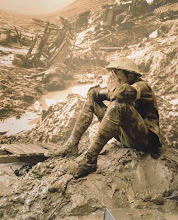

 Posts
Posts


